An Engine, Does It Run?

Hello again, and good May Day to those whom it may concern!

This time I was thinking of opening up on the topic of choosing an engine, which understandably, has been an arduous undertaking due to the different pros and cons relating to each engine.

So far, I’ve consulted the main pixel artist on the matter, and we ended up with RPG Maker VX Ace. The choice is mostly due to the ease of use. Granted, the system has many limitations compared to, for example, Unity, which is a more versatile game engine, and is available to many more platforms than VX Ace, which is only available for Windows-based operating systems (for now at least).

The choice was ultimately narrowed down by the decision to make a game, rather than an engine. And the RPG Maker franchise seemed to offer close to everything that was needed for a nostalgic SNES -era RPG. There were a few choices to make, but ultimately the older versions got pegged out of the list due to inherent limitations of the engine to 16×16 pixel tilesets and 320×240 resolution for the screen (If you’ve ever forced yourself to watch YouTube on 240p, you know what this looks like.).

VX Ace seemed to have nearly everything needed from the get-go. A good example is parallax mapping, meaning that different parts of the game’s maps can be layered separately as an image to create objects that aren’t centered to the tileset system, thus allowing more freedom to the development.

The things that I personally found lacking, was the lack of side view combat, which was replaced by the older Dungeon Master style first person view. Further the character movement was tied to tile based horizontal and vertical movement. Both problems seemed easy enough to fix through re-writing the scripts associated, so the engine was decided upon.

As most other things such as concepts and storyboarding are close to done, the game can slowly start going from paper to actual digital form. As some great man once said, this might not be the beginning of the end, but it just might be the end of the beginning.

Thank you once again for sticking through the post. Here’s a concept picture of a Daitengu.daitengu_rUntil next time!
Standard

Courtly Business

Now that the dust of celebrations has landed, I thank everyone who has been patient enough with me to actually wait for an update! A few posts prior, I talked about the spiritualistic aspects of the game, followed by the short concept and history of the fox spirit Nae. This time, I thought I’d work off the tangent of these two, and enlighten you a bit of my vision for the royal court located in the capital city of Ôkyô (王京).

In Ôkyô, the court nobles consists of 6 noble houses, which have a firm hold over the seat of power in the court, right under the royal family. The main noble houses are then further served by 24 aristocratic families, which are subservient (compared) to the higher court, and take care of the more menial tasks. In essence, the upper house decrees the course the empire is to take, and the aristocrats do their bidding. It is worth noting however, that the royal family is joined by a Hizoku seeress, who answers only to the Emperor himself. The Hizoku’s purpose in the royal family is to divine the correct path for the empire, and convey portents of possibilites to come.

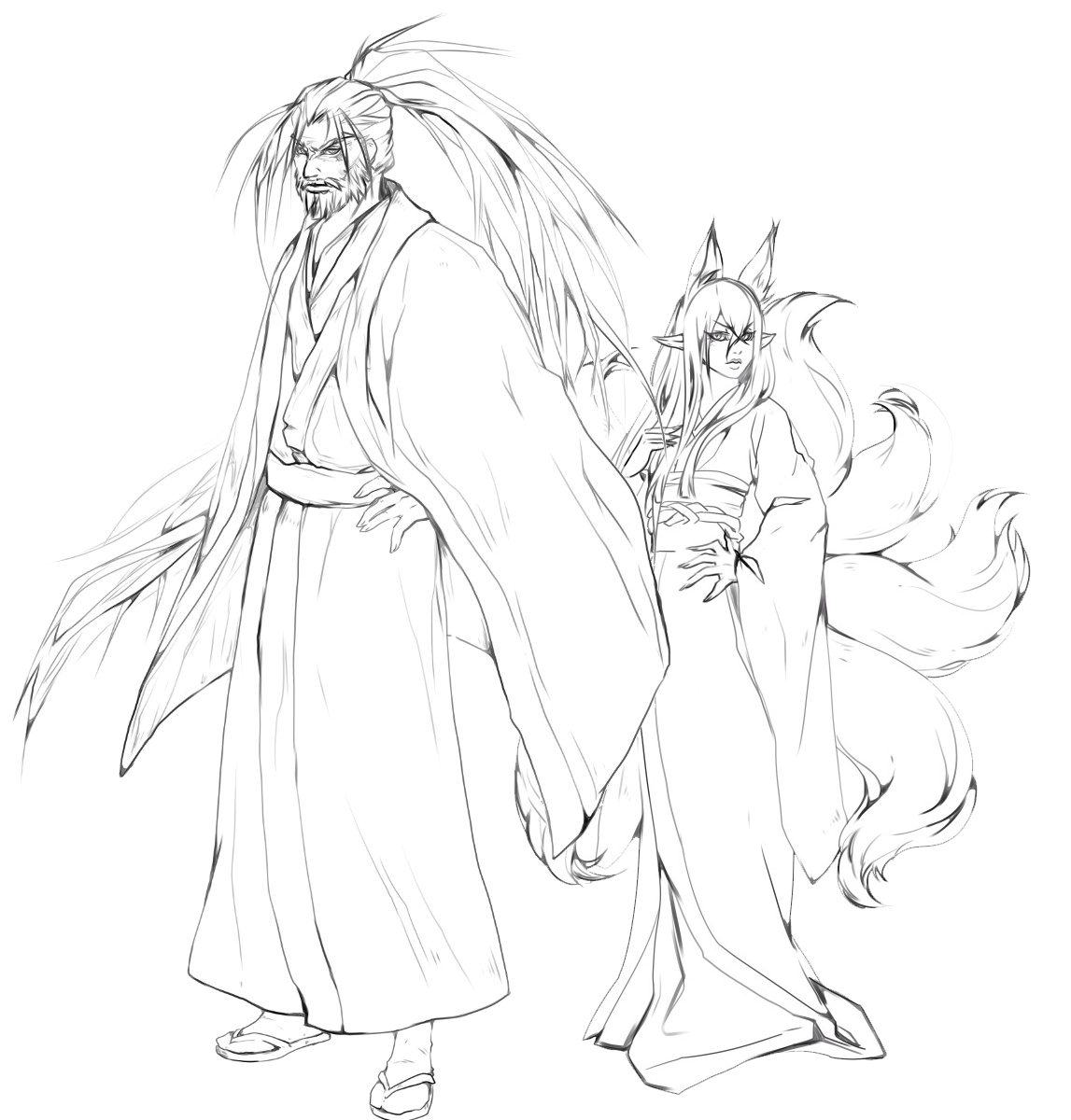
Currently in the seat of power, lies Tengan no Eisai (天冠の栄斎), who during his lifetime of 72 years, has ruled the empire for fifty-six years in succession. Having unified the land, he is now a sovereign ruler of the continent, and has thus been able to focus his efforts towards repressing other conceived threats towards his country.

Emperor Tengan & Hizoku Seer Iasu

Concept for Emperor Tengan & Hizoku Seeress Iasu

The emperor has been expected to retire to a monastery for many years now, thus withdrawing from the tiring imperial lifestyle. Alas, so far Tengan has held his iron grip on the throne, keeping the balance of power inside the court, much to the dismay of his son, and the noble households vying for power. Perhaps, this too, is an influence of the Hizoku working in close tandem with the Emperor?

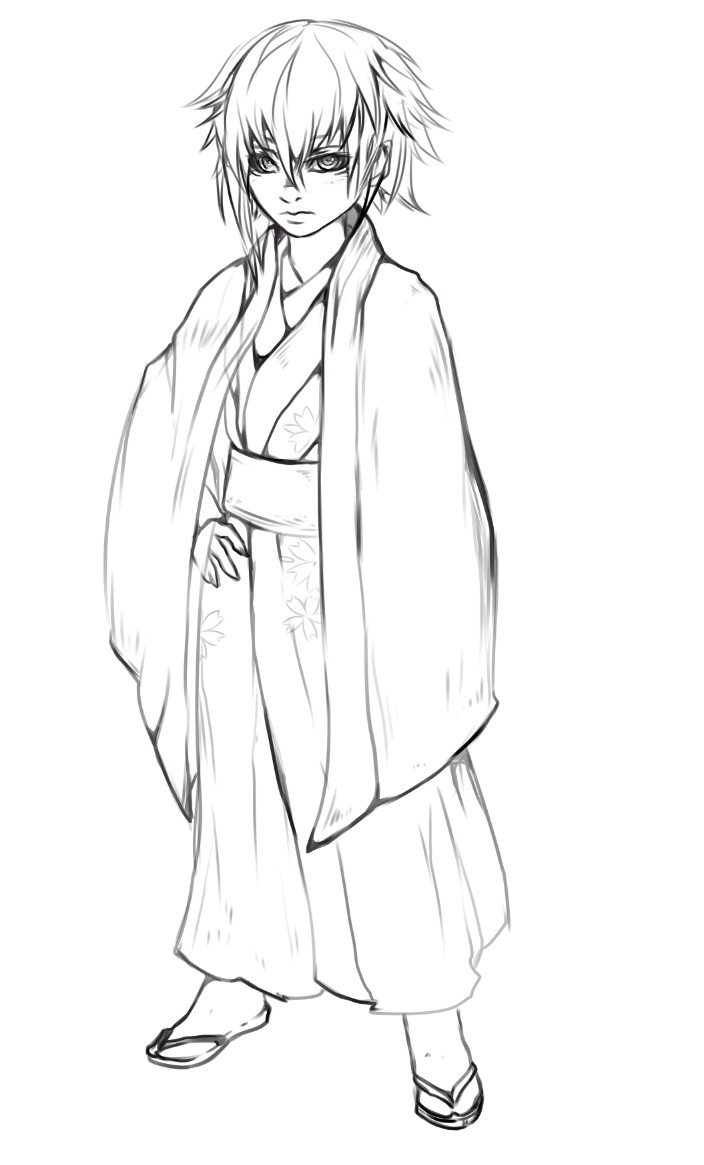
I’ll let you off with this much for today, as an added bonus, I’ll throw in a concept art of the crown prince to boot. Cheeky little anklebiter he is!

Crown prince

“Gramps!”

Standard

Season’s Greetings

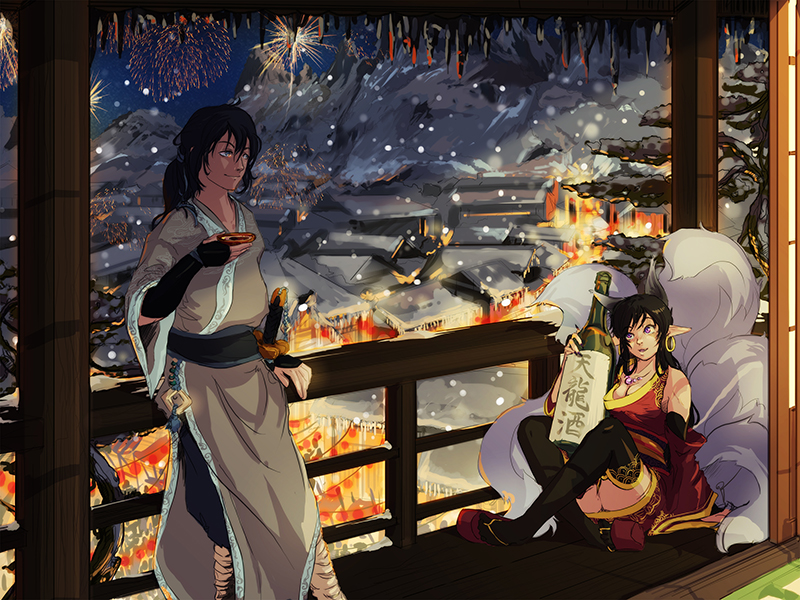
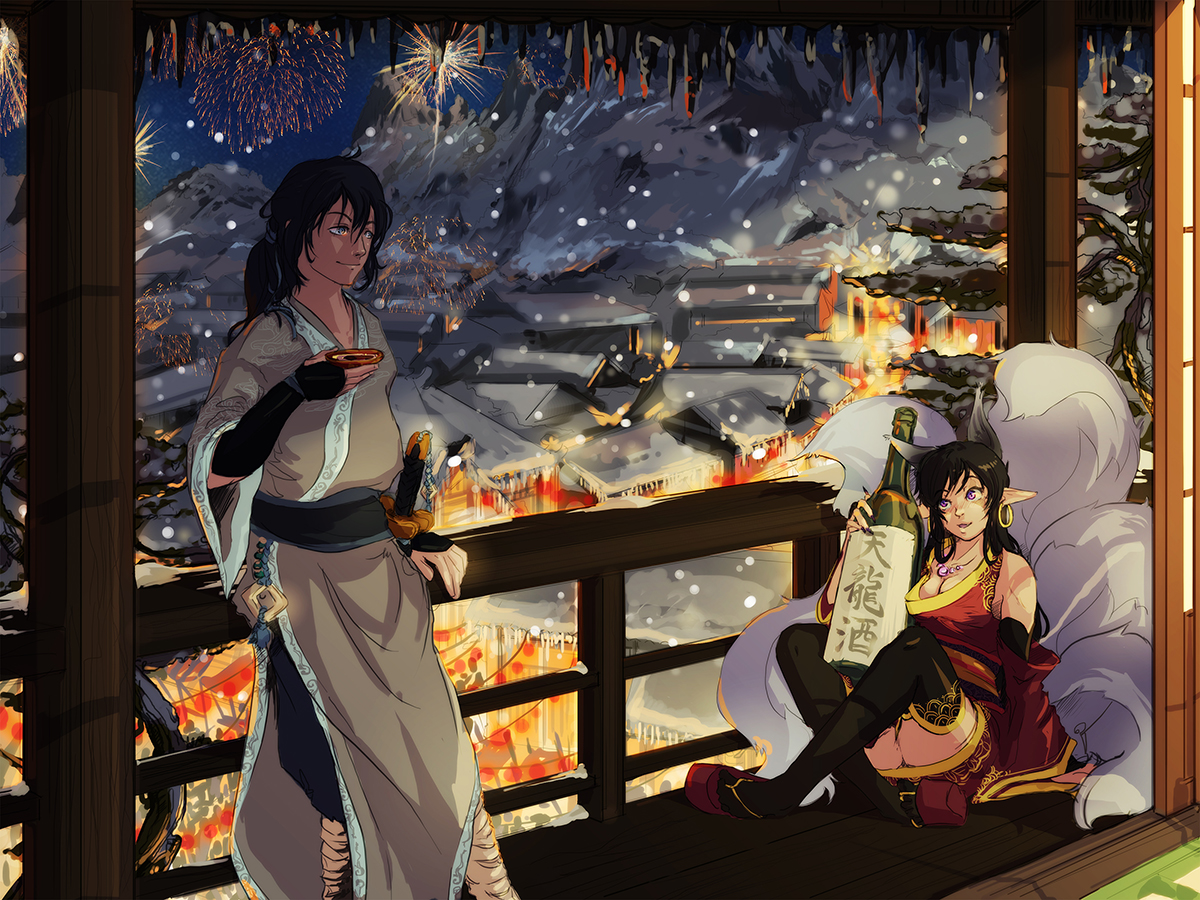
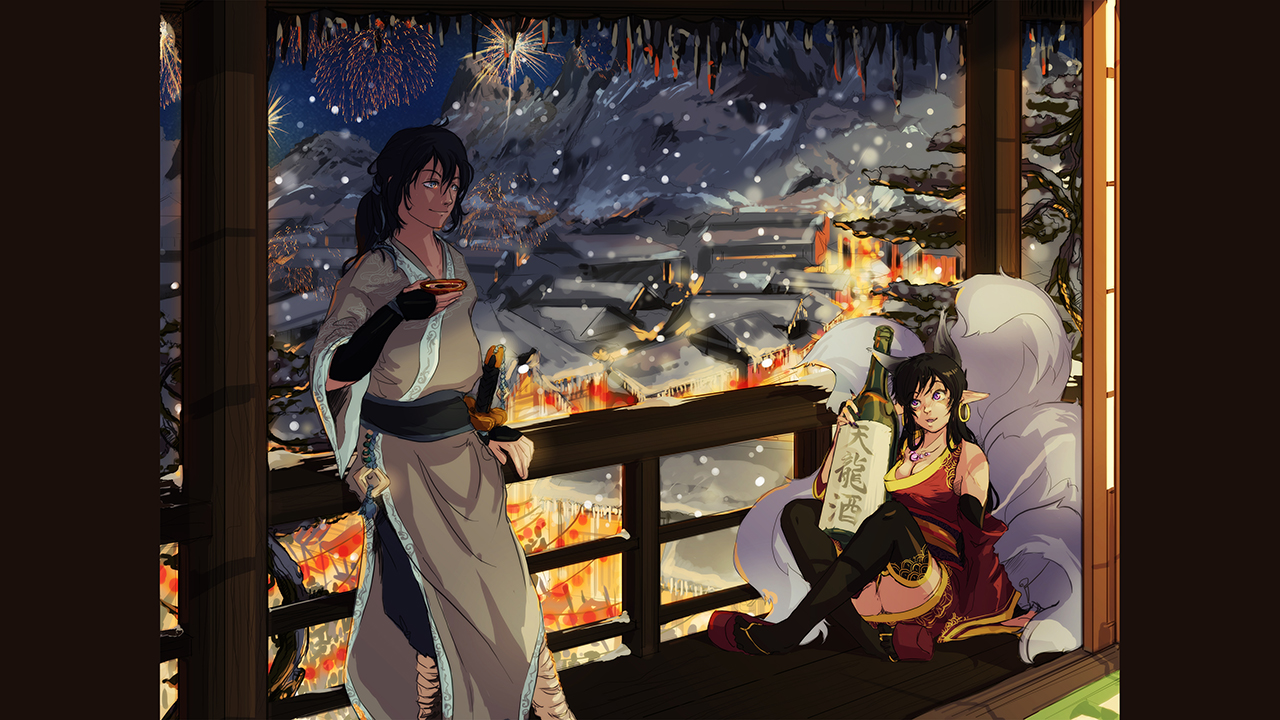
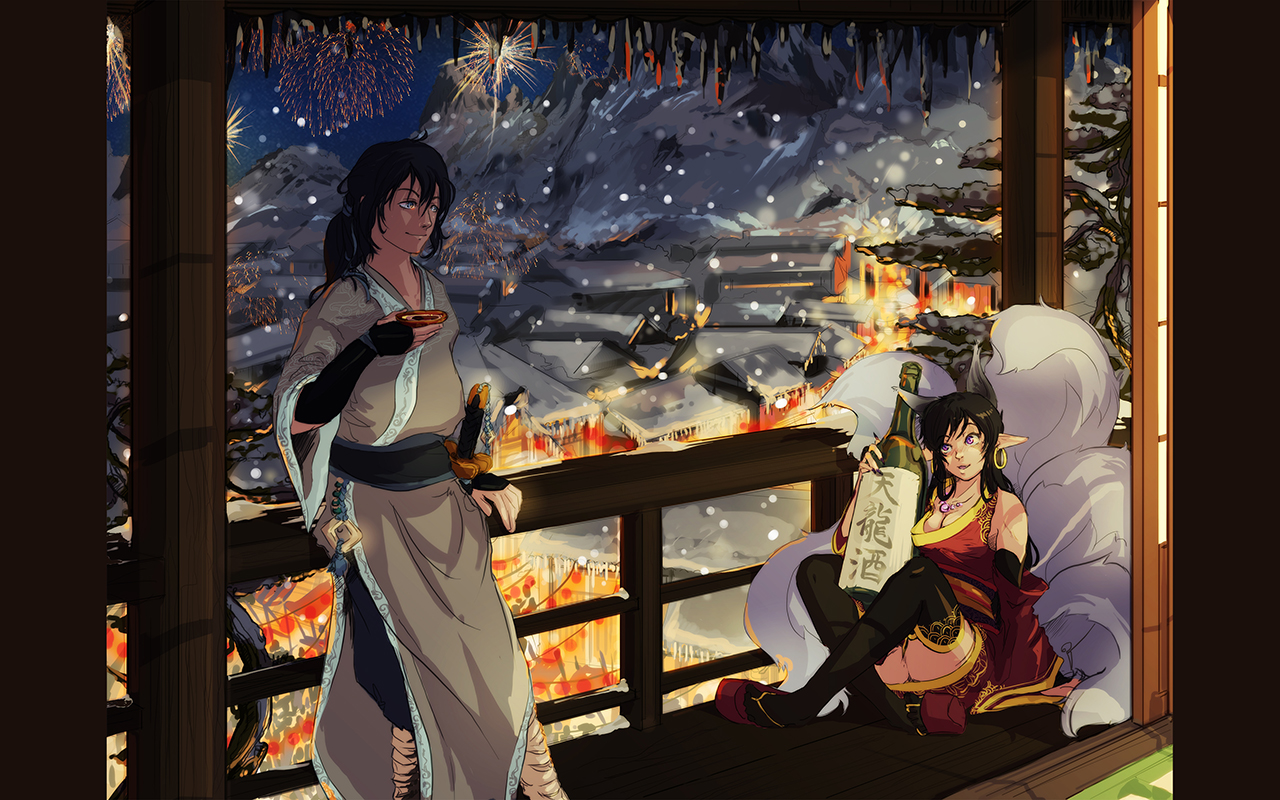
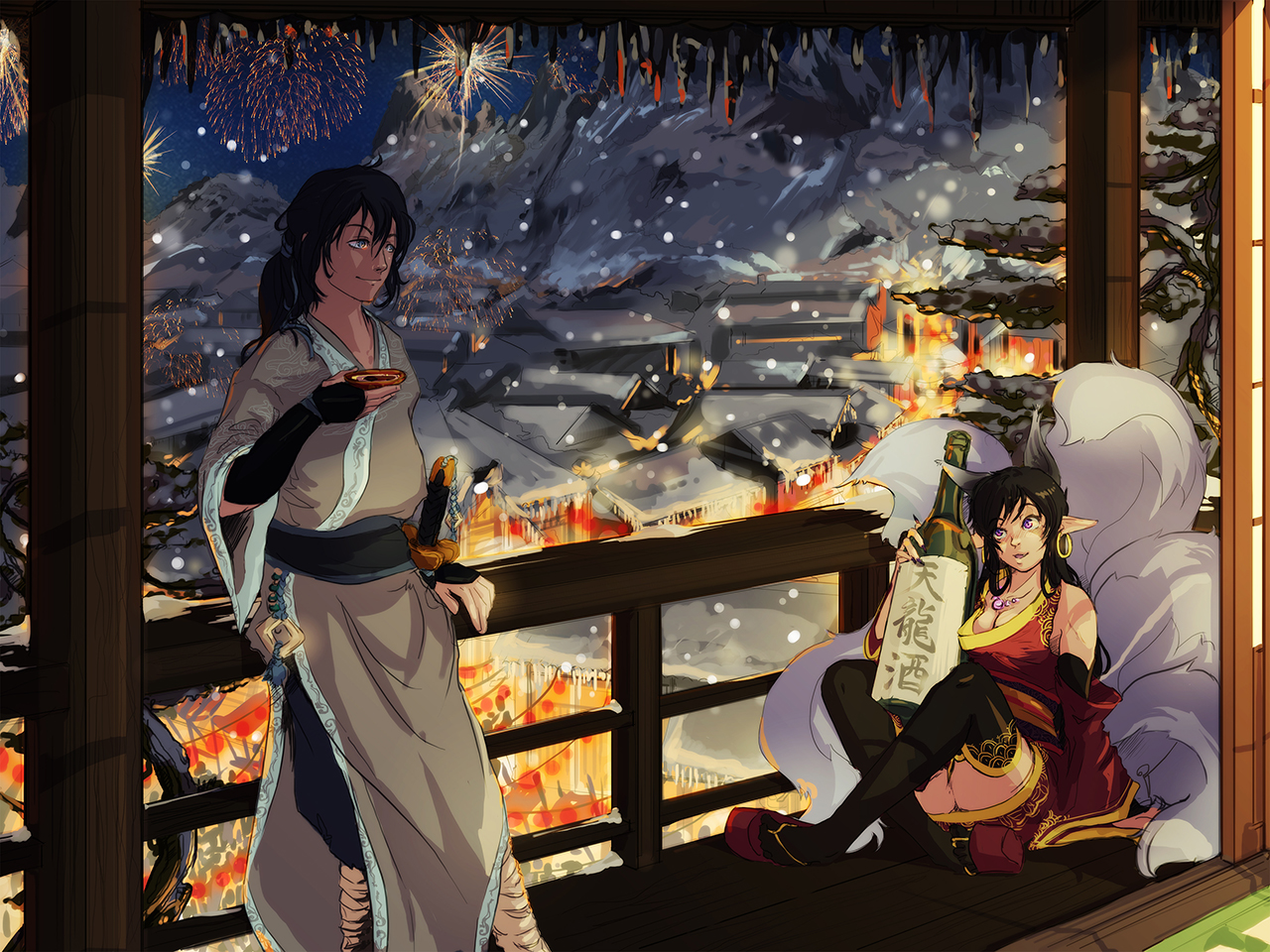
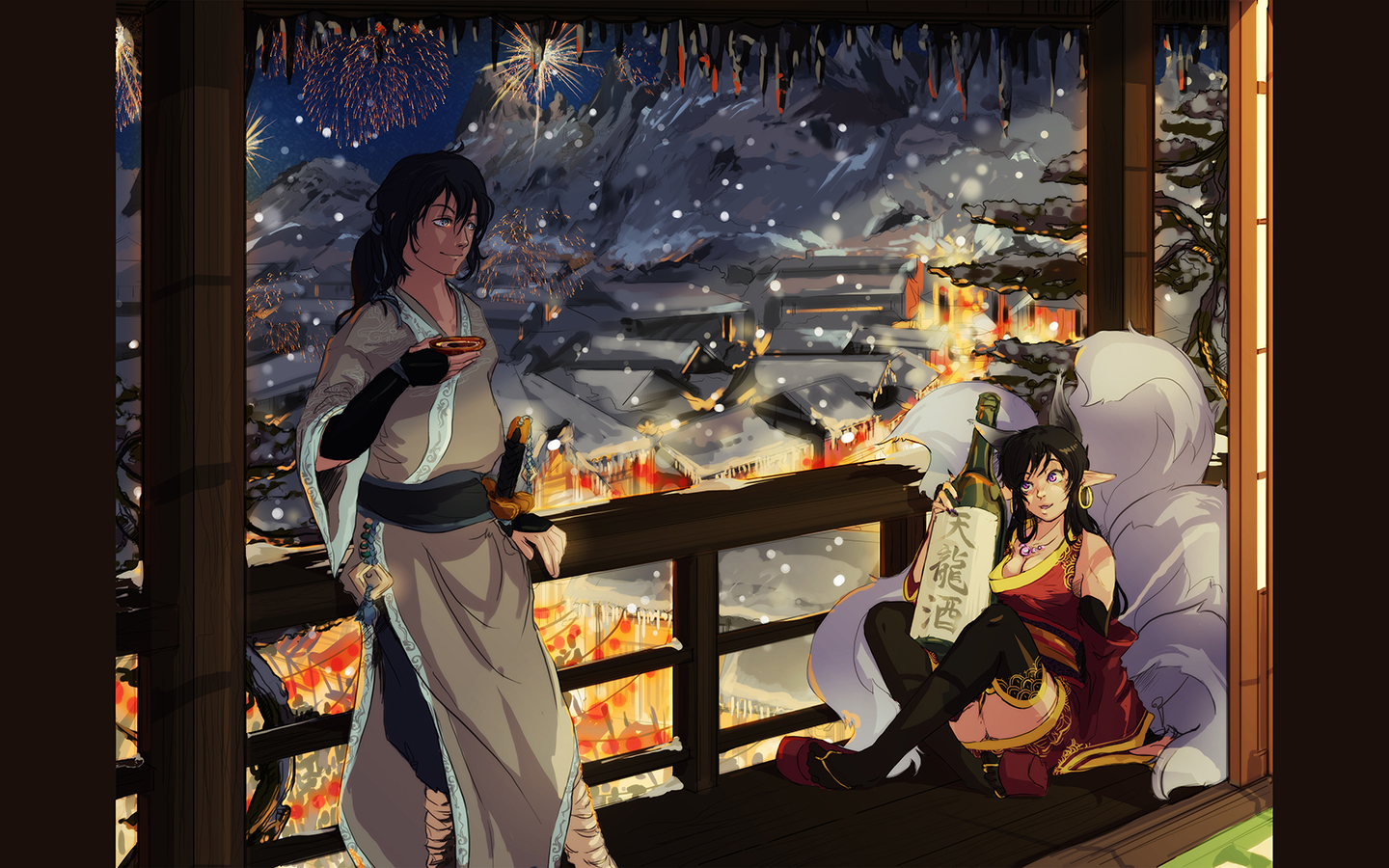
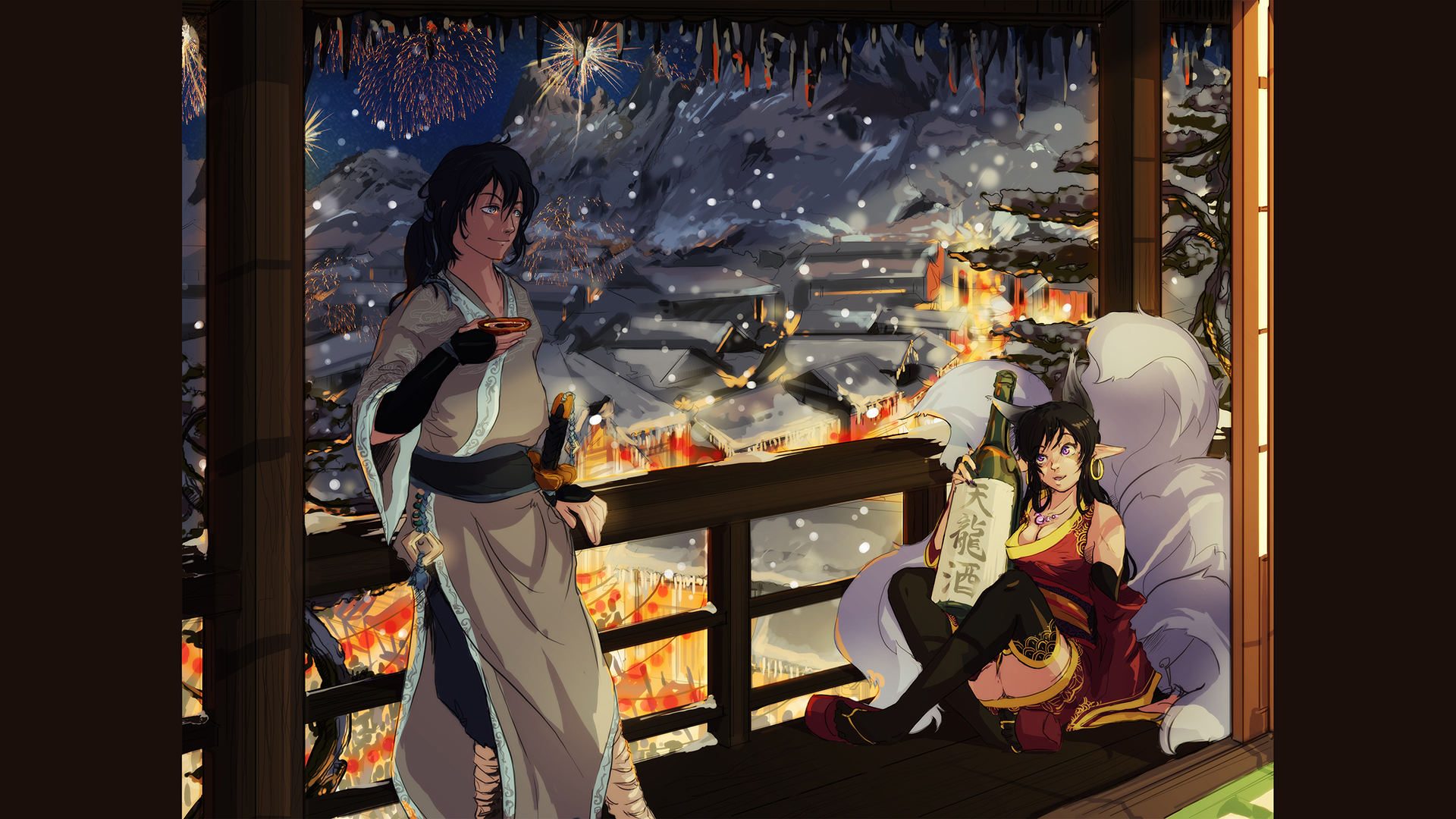
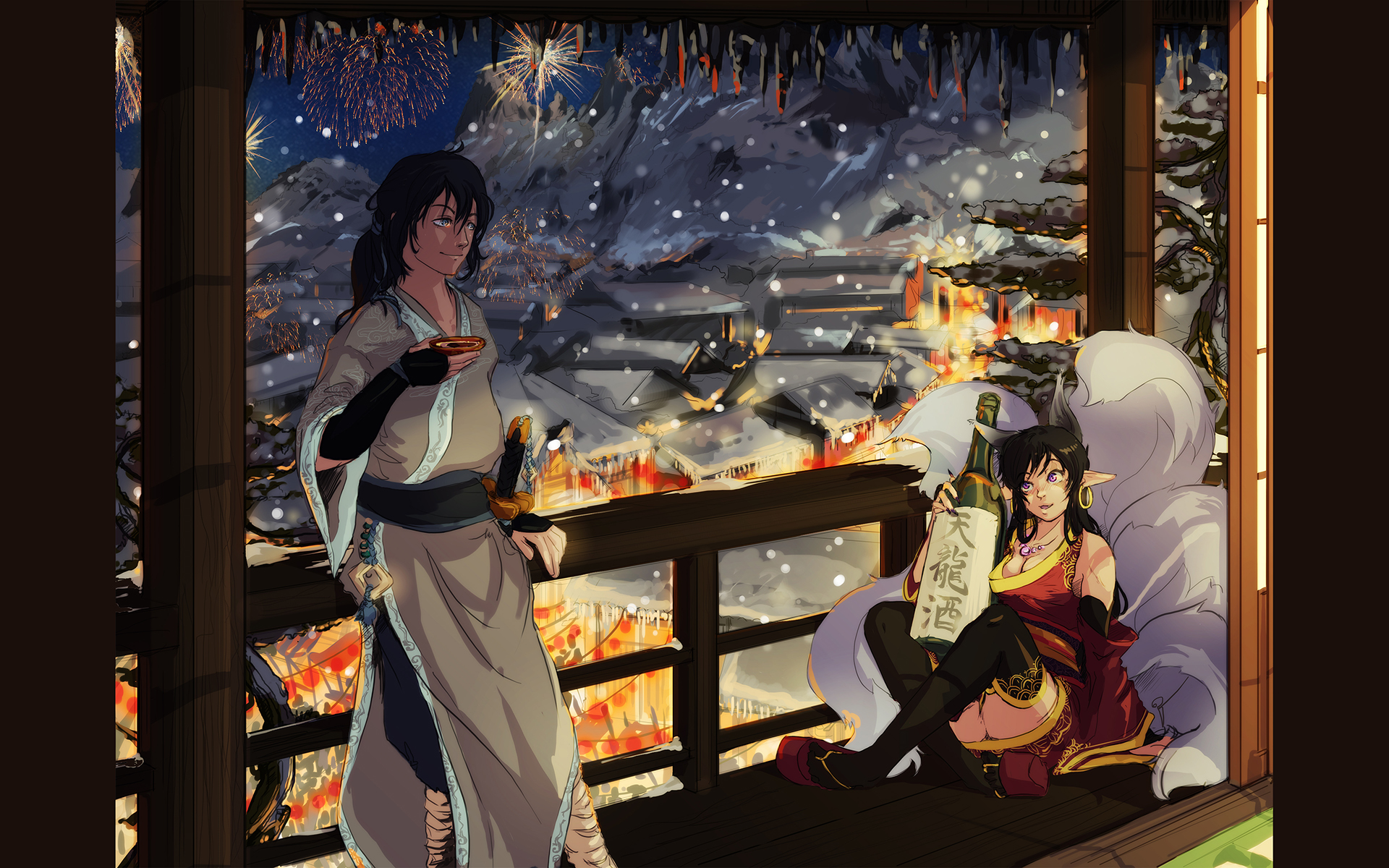
It’s the time again to roll out the festivity banderolls, decorations, and especially the good food and drinks! I’ve been busy moving houses and arranging the stuff, and while I’m still situated in my old apartment, it is about time to say goodbye to this venue I could call a studio. While wishing most of you very good holidays and a happy new year. I hope I can appease you with a bit more traditional piece, which will be made available for download when it is done. I promise I’ll try to make more frequent updates next year (a new year’s promise?). Until then! scene-Seasons_Greetings-sketch03And now, as the holiday’s crescendo draws close, we’ve got our hands on the coloured version. Hopefully it was worth the wait. There are download links for the different most common sized wallpapers provided for you at the bottom of this post.

Seasons_Greetings-1600x1200

800x600

800×600

1024x768

1024×768

1200x900

1200×900

1280x720

1280×720

1280x800

1280×800

1280x960

1280×960

1440x900

1440×900

1600x900

1600×900

1600x1200

1600×1200

1680x1050

1680×1050

1920x1080

1920×1080

1920x1200

1920×1200

Standard

Of Foxes and Men

Oh dear me, it’s that time again!

At first, I was going to write about all the main characters in the group, but decided against it as some parts of the character quirks haven’t been fleshed out fully for the purpose. So this time you’ll have to do with one of the main story’s driving forces: A devious fox spirit released from a circa thousand year slumber by the main character, after being sealed for a foxy reason or another.

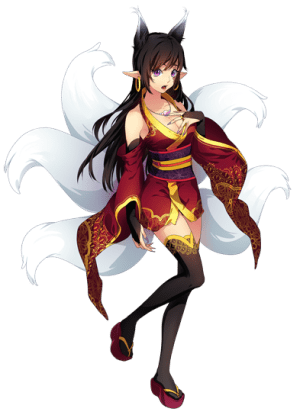
The fox spirit’s been hanging out as a development logo on the blog for a while now, but I decided it’s high time to introduce her as an hors d’oeuvre for the game, or an appetizer if you so will.

She is a divine silver fox spirit hailing from the noble beast-kin called ‘Hizoku’ (or 豼族 for the kanji savvy). The vixen’s nomenclature is ‘Tsukumikami no Nae’ (月御神の七恵). The former being the surname, latter being used as the first name. As she is affiliated with the moon, Nae is a lesser lunar deity, who, being preceded by six older siblings, has not been in charge of the more important family matters. The Hizoku have taken charge of spiritual matters in the continent for thousands of years, and they take to human noble households as advisors, seers, and oracles, the most powerful acting as advisors for the emperor themselves. As such, the Hizoku are revered much by the common populace as the pinnacle of spiritualism, and are thought of as sacred beasts. Many of the festivals are still arranged in their honor. For example the Tsukimi Moon Viewing festival.

On further note, the story-driven parts of the game will be acted out in a style more common to the visual novel genre of the far East. The character emotions being shown on the screen based on what is written out on the screen. This is my attempt in that the storyline should be enjoyable, while still mixing my two greatest passions, reading and old-school RPGs. I’ll leave you with a last sketch of the character emotions in the game (click to enlarge). Hopefully I’ll have your attention the next time as well!Emotions

Standard

The Path Where Kami Exist

This time I thought I’d talk about a dominant religion in the world of Alrothia called ‘kannari no michi’, or ‘the path where kami exist’, if you will. The religion mixes heavy influences from Shintô and Buddhism, but as it’d take years of actual research into the subject matter at hand to truly understand it, so I’d rather make an interpretation with a different name to spare myself from the liability of making a heretical misjudgement.

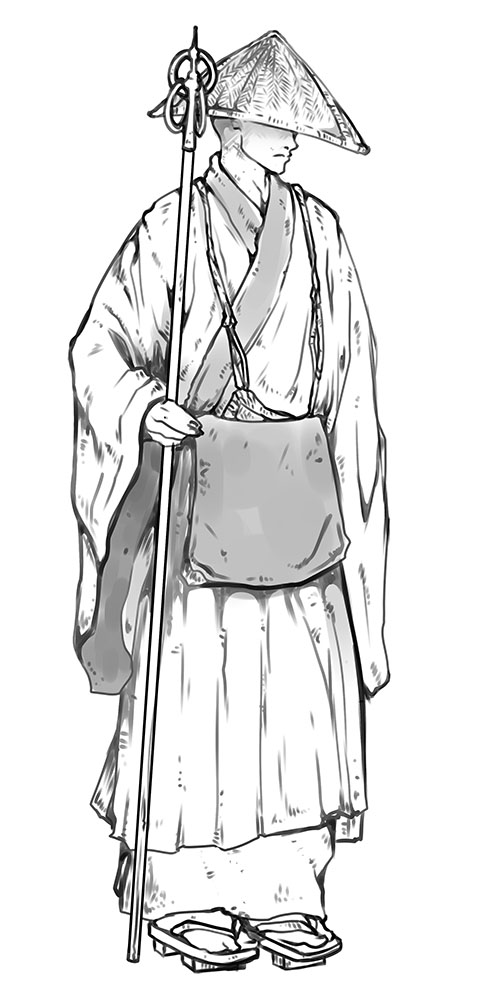
Mostly the part seen of the kannari are the monks that are the religious core of the dogma. They value all life as sacred, and believe that true enlightenment is found in abandoning worldly desires, and in service to the ancestral spirits, without growing attached to them, as all life is transient, whereas the spirit is forever. The followers of kannari believe that any natural thing is capable of housing kami, in other words lesser spirits and deities, and that there exists a certain duality where the spirits walk among humans and are revered as a part of nature. Especially strong focal points of these kami are the shrines which are usually built upon natural leylines, and they usually house a powerful kami, who in turn works as a local land deity, drawing their power from the prayers of the locals. This co-existence is not without its problems though, as not all deities and spirits are of a good alignment, and some could even be called malignant. Sometimes these kami might be disturbed simply due to human interference, or influence to their natural habitat. Due to this, it is sometimes necessary that a spirit sealer is sent where the kannari monks have failed their attempts at appeasing the troublemaker in order to confirm whether the errant kami has to be purified.

Sadly, I had to cut the post a bit short from what I had hoped, but it is to keep the world slightly in the dark in order to keep something of interest for the future. I also noted that it is surprisingly hard to type objectively of a religion whose main point in a fantasy setting is that most of the practiced things and customs are true. Does religion stop being a religion when the things it practices are true, or are at least, not a matter of personal belief?

Regardless, I thank you for the continued (or fleeting) interest in my project! I hope to have you here the next time as well!

A kannari monk.

A kannari monk.

Standard

Progress in Absence

Hello again, it has been an excruciatingly long 4 months! Due to a trip to the far east to collect materials, and personal experience with the culture, I’ve neglected to post anything on the bi-monthly basis. Woe is me.

Alas, the remedy is here, and I thought I’d post a bit of something to whet the appetite of people who might be even remotely interested in the project!

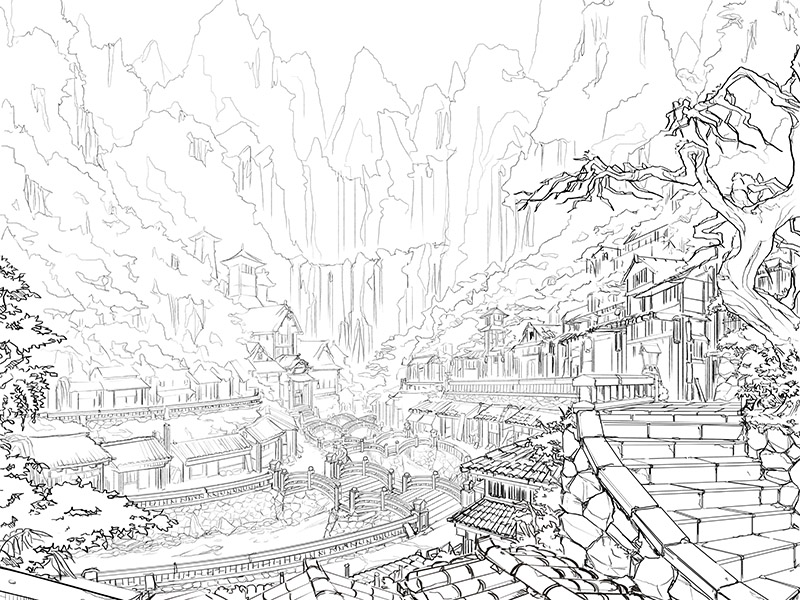
background-Senboumine-lineart00

Senboumine, a hot spring village hidden in the misty mountains.

Starting off with the next area in line. Senboumine is a peaceful mountain ridge village with a stream running through. During autumn, the surroundings change colour as the dominant maple trees take their fall-hues. The lifestyle is certainly lax, with the village offering a hot spring to rest in, albeit lately a mischievous bunch of monkeys and other unsavory types have been spotted in the mountains.

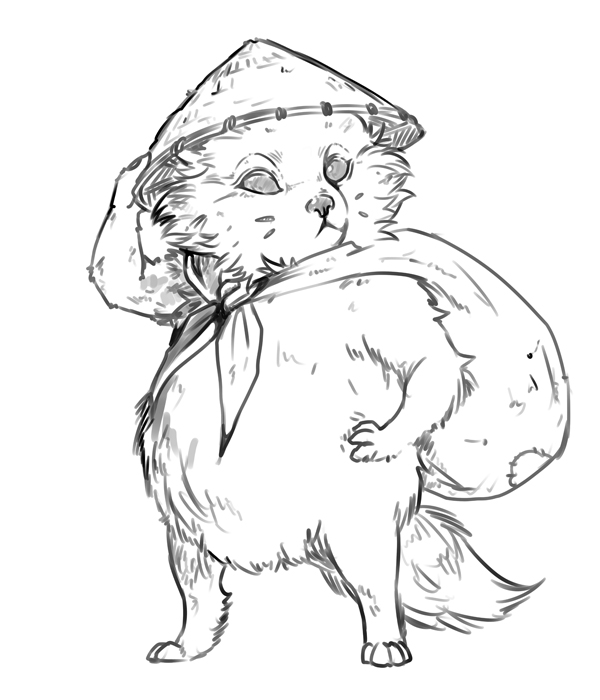
Or perhaps you’ll even end up meeting one of the Tanuki, the iconic raccoon dogs, who are usually up to no good. Was that bamboo tea whisk an authentic product, or were you merely bamboozled? During the game, you might want to keep your eyes peeled for these little fellows, as they may sport blessings in disguise, or pitfalls for the unwary.

T/N: Now then, whom will I catch in my ploys today?

Such deal, many buy, wow.

I hope next time I’ll have something worth showing on the actual game tiles, but sadly, the tilesets have been a slow work in progress, so you will have to stay content with concept art for now. And since this project is still pre-alpha, I am unable to make promises when I’ll be able to get the ball rolling in earnest!

ETA: When it’s worth showing.


Standard

Sculpting the Land

This time I’d like to share a few words about the creation process involved in bringing the game world to life.

As of now, the game is still very much a skeleton model of concepts which are being fleshed out onto a frame, which will later on support the game itself. The areas in the game involve a slightly more complicated way of fabricating them. First, I personally go through a lot of different concepts from real world examples and get in touch with what I’d consider to be a concept that would be plausible (believable) in real life, should the mythological and fantasy aspects be stripped off. Then the process moves onto negotiating with the background artist in order to create a sketch of the area, which can then be used as a reference to find historical inaccuracies that can either be covered with a fantasy equivalent, or require further investigation from their real life counterparts. A good example would be the traditional Japanese style ‘Minka’ thatched roof houses. We had an exchange of quite the few messages in order to determine how the windows were sealed during the winter time, as glass panes were obviously not in use at the time in the real world. This of course leads to the question as to whether it is necessary to go into such detail for the sake of a fantasy game, but as said in the previous post, I personally think it is worth it in the end. Even if to just deepen the feel for the game world itself; The game being after all, a re-imagining of a popular concept through Westerners’ eyes. After this process is done, it is used by the other artists to create a unified feel to the derivative artworks, such as the tilesets, which are being used in the game world itself.

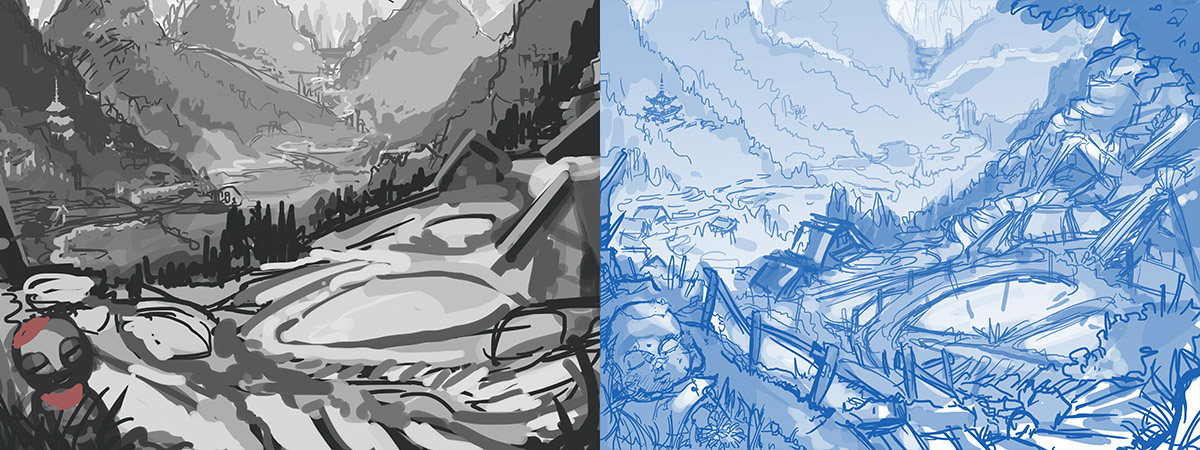
background-Hayamadani-layout_n_sketch000

From concept to flesh, the imagining of the mountain village called Hayamadani.

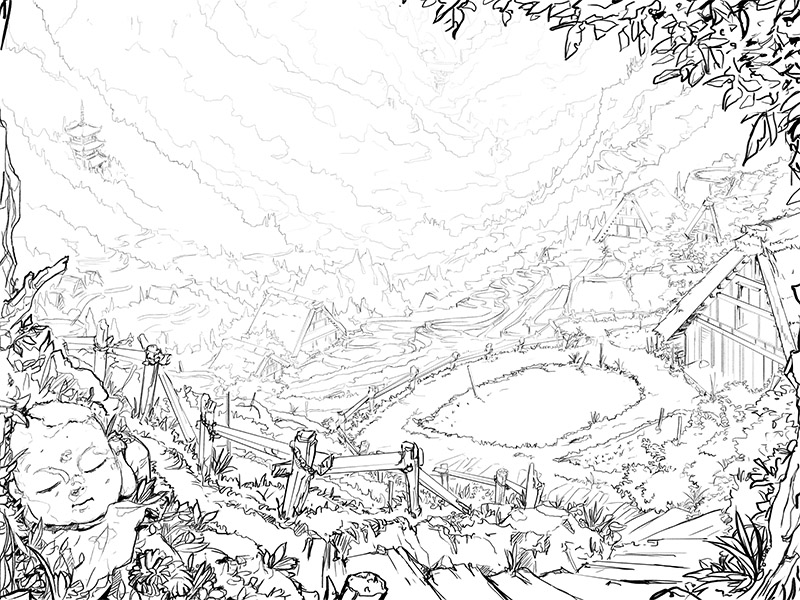
An example of the above process can be seen in the village of Hayamadani. A simple mountain village, secluded in a valley circled by eight mountain peaks. A rather pastoral piece of land where the life has lulled into an almost complete standstill, broken only by the changes of the seasons. Where agriculture and hunting is the equivalent of daily grind, and the worries of the big cities seem so far away. Simply put, a mountain village filled with simple people who go through their lives on a day-by-day basis.

This time I’ll cut the post slightly shorter than usual, but hopefully I’ll have something more interesting for the next time. As always, thank you for reading!

And the completed lineart, click to open separately.

Hayamadani as completed lineart, click to open separately.

Standard

Artistical Directions

As the festivities at the end of the year draw ever closer, I decided I’d be posting a few lines about the vision I have going for the game. As mentioned in the post prior, I’m looking to bring a mixture of an older art style of the SNES / PSX -era RPGs mixed with the modern influences of visual novels of The Far East, which never seemed to gather much of a commotion in The West,  despite having a solid, albeit small fanbase.

The game itself will be split into several smaller countries taking to different cultures, from which I’ll try to draw up artistic influence. A good example is that I’ll try to have most of the countries inspired by The West in the game, consisting of Baroque architecture mixed with the fashion from around the turn of the Victorian -era, in an attempt to create a sort of stretched perversion of the timeline in Central Europe, and Britain, through the middle-ages, and past the renaissance. As for the Northern countries, which will be housing the dwarves and other primitive tribes, I’m attempting to take to Scandinavian, Finnish, and Russian mythology, and traditions; Meanwhile the main Eastern continent of the game will take its mythological, clothing,  and architectural influences from the Chinese, Japanese and Korean cultures, hopefully with plenty to spare.

Spritework

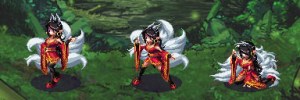
Nae’hri’s side-view battle sprite preview.

The game world itself will revolve around old pixel graphic tiles, which are most likely familiar to anyone who has tried an RPG on the SNES or PSX -system. The characters will consist of 4-way sprites for movement on the overworld, and side-view oriented during the combat. The art-style will try to stay faithful to the original, while trying to overcome the limit of what had been possible to  make prior today. The game dialogues outside the storyline will be handled with dialogue boxes familiar from all the older RPGs, while most of the storyline and important NPC conversations will be handled with a visual novel style interpretation, where the character artwork is placed against a back-drop and the conversation is handled outside the normal game world.

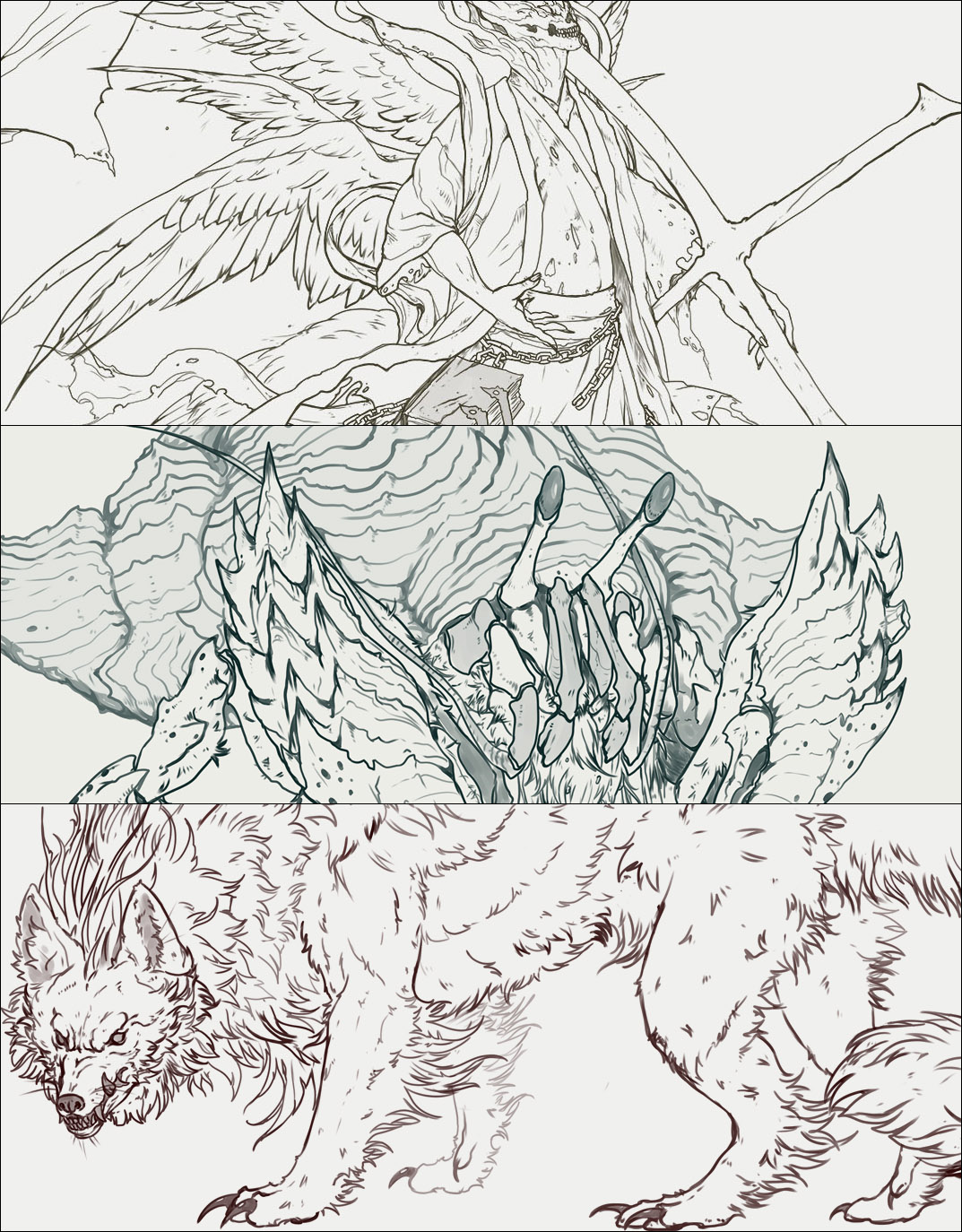
As for the development of the game so far, the artists are currently focusing on the character artwork, concept art, pixel artwork, and music. Hopefully the time for backgrounds and other core artwork will come soon, but I’ll leave your mouths hopefully watering for more with the inclusion of the lineart for three future boss monsters. I’ll hope that the next few months will bring something interesting to throw at you. Until then, I hope you’ve liked what you’ve seen so far!

Boss Lineart

Boss monster lineart, click to open in full screen.

Standard

It Started as a Notepad

If someone had told me that I’d be starting my own independent game developing process back in 2005, when I was jotting down notes about different ideas I’d like to see in a game into a list using dashes, I probably would have laughed them off. Now? It’s a bit overwhelming to be honest.

As fantasy RPGs have always been a fun way to pass time for me, especially the SNES, and PSX -era ones. I thought I’d aim to make a game which combines the retro feel of older RPGs such as Chrono Trigger, Final Fantasy, Secret of Mana, and Suikoden, with the storytelling style of light novels (or visual novels if that’s your cup of tea) of the East. With nostalgia out-of-the-way, I can concentrate on elaborating a bit on why I took on this project: I have always been under the impression that old games were made with the best possible resources available at that time, and for that platform. On the other hand, I feel that giving something a retro tag nowadays is an excuse for putting in bad graphics and calling it a design choice. And while I must admit that I’ve already had to scale down the scope of my vision (I also understand if the people who did these choices in the independent game market had to do so too), I’ll try to keep the overall quality as high as I can within the boundaries of my budget.

The setting of the game is set in an imaginary continent which takes influences from the South-Eastern Asian mythology, which are then mixed with Western fantasy ideas to hopefully bring a unique take on an otherwise seen setting (I’d like to call it a Western interpretation of the far East). The concept of the game revolves around a concept I had not seen used before, and which I hope to be an even remotely interesting idea: A political coup d’etat without military involvement. Now, that doesn’t sound like a lot of fighting, granted, which is why the game focuses on a wandering spirit sealer for hire (and his party), who happens to get caught in a political power struggle in the court. The game itself should allow the player to destroy different boss monsters around the map if they choose to do so, but at the same time, the game shouldn’t hinder players who wish to follow the different stories unfolding inside the game.

The idea is to create as modular as possible fantasy RPG, which is event-driven throughout the game. In a way that you have splitting choices, which bring you towards your final objective. The key concept being, that every choice should be distinctly different in a way or open different parts of the lore. Also, while they might be binary choices with no real difference towards the final ending, they provide the player with different kinds of insight to the game world.

In my future posts, I will focus on elaborating on the points I’ve made here. Hopefully you’ll stay tuned and watch the game project grow.

Standard